Securing reliable pest control service in Wichita requires targeted biological countermeasures matched to local insect swarm patterns and weather cycles. Active infestations of subterranean termites, brown recluse spiders, German cockroaches, and field mice require clinical eradication protocols rather than general broadcast sprays.
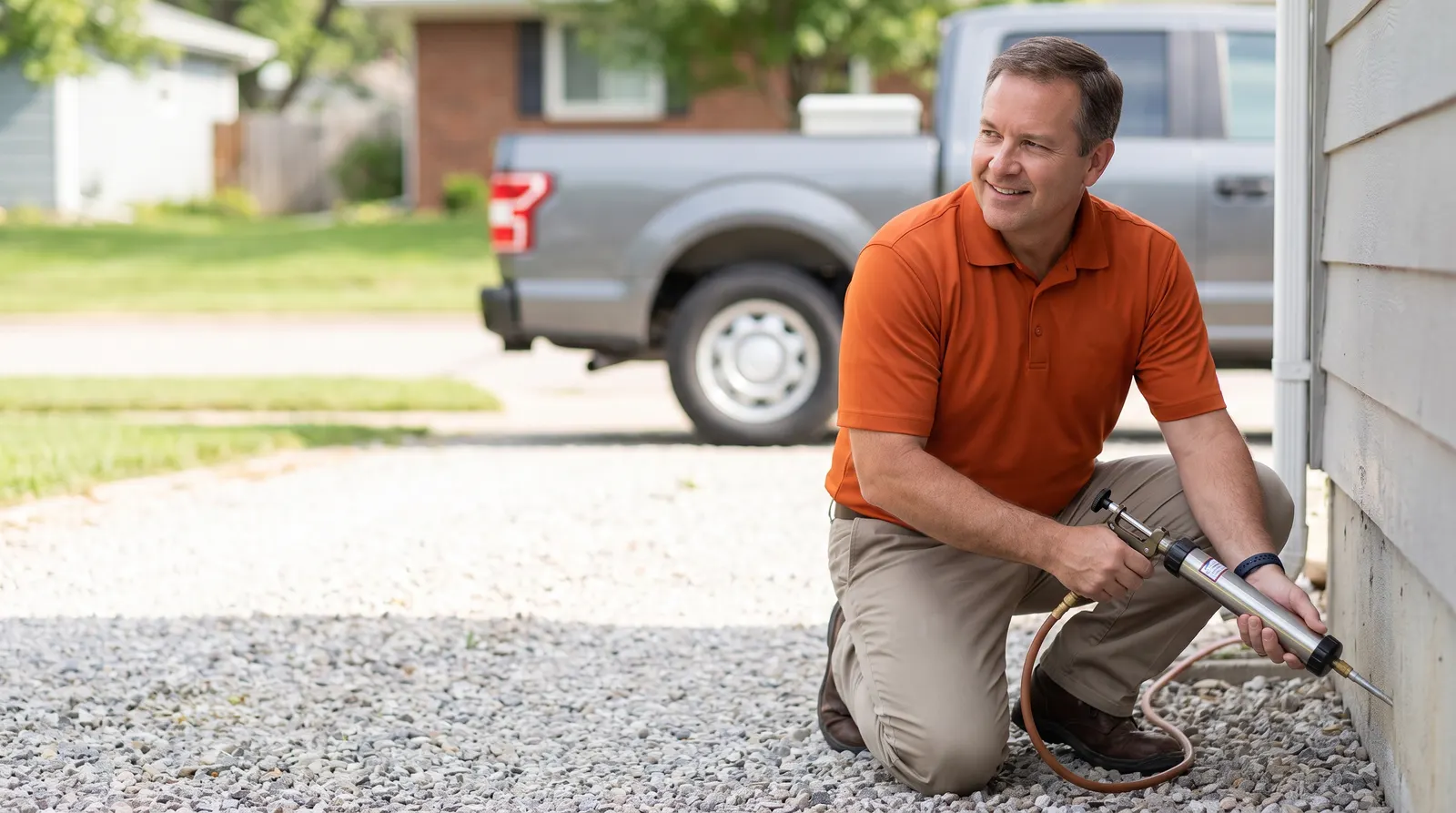
A professional pest control service in Wichita is a targeted structural treatment that identifies, neutralizes, and excludes biological pests from residential and commercial properties throughout Sedgwick County.
Every service reflects the same meticulous attention to detail, whether it's a single job or a larger pest control sevice project across Wichita.
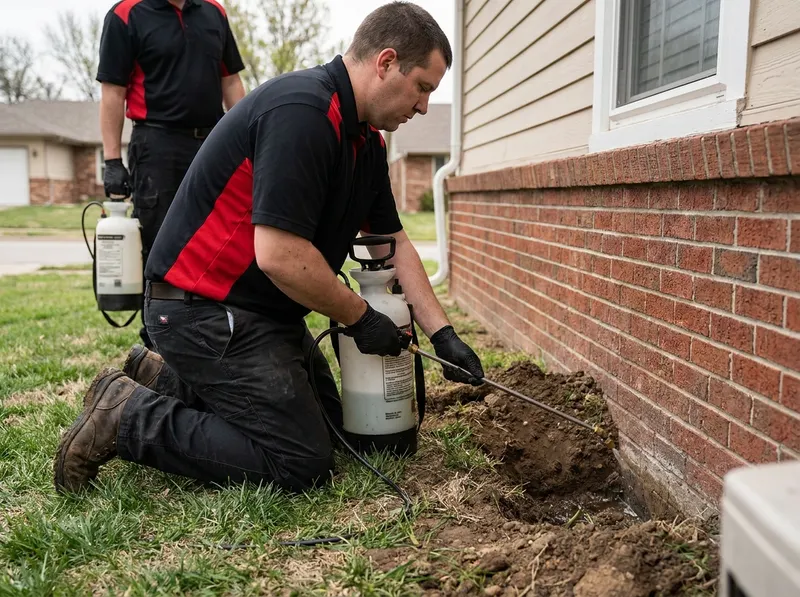
Subterranean termites cause severe structural framing damage throughout Sedgwick County's sandy loam soils and river floodplains. Treatment establishes an uninterrupted non-repellent liquid chemical barrier along structural foundations via exterior soil trenching, rod injection, and precision concrete slab drilling. The non-repellent termiticide remains undetectable to foraging worker termites, allowing the active chemical molecule to transfer mechanically between social nestmates during grooming and mutual feeding, systematically collapsing the subterranean colony and queen. Foundation trenching reaches six inches deep into soil along continuous footings, while interior garage slabs and expansion joints receive spaced hollow-core drill injections every twelve inches to seal interior pathways.
Get a quote →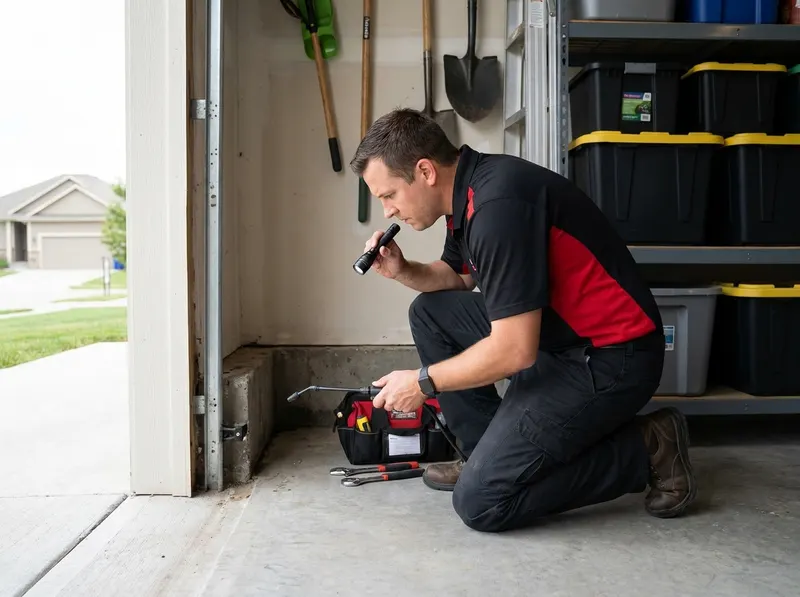
Brown recluse spiders nest within structural wall voids, fiberglass attic insulation, crawlspace sills, and unfinished basement corners. Management utilizes microencapsulated dust formulations injected directly into electrical wall chases, plumbing access panels, subfloor framing, and attic rafters. This targeted internal dusting breaks systemic arachnid lifecycles without spreading broad aerosols across open living spaces. Technicians place systematic physical glue-board monitoring arrays along baseboards and behind storage furniture to track activity trends. Outdoor perimeter defensive zones suppress outdoor harborage in firewood stacks, landscape ties, and exterior siding gaps to halt secondary indoor migration.
Get a quote →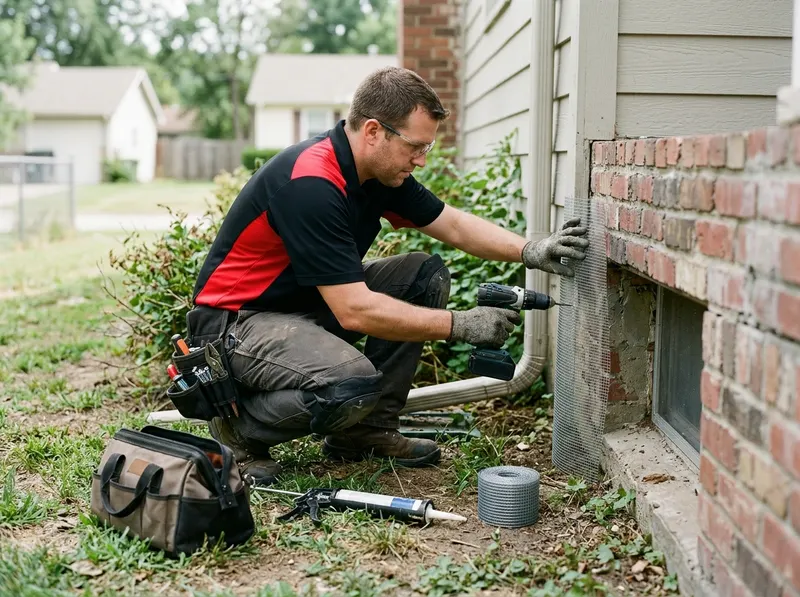
Midwestern house mice, deer mice, and Norway rats infiltrate residential structures during late autumn temperature drops, seeking harborage near water pipes, water heaters, and furnace closets. Eradication combines mechanical snap-trap runs within non-traffic crawlspaces, dropped ceiling chases, and attics with permanent physical exclusion sealing. Technicians inspect the exterior foundation perimeter to identify entry points, sealing exterior structural gaps larger than one-quarter inch using twenty-gauge galvanized steel mesh, copper wire mesh, and elastomeric weatherproofing sealants. Tamper-resistant exterior bait stations positioned along structural runways control external rodent pressure without introducing poison vectors into interior pet-accessible living areas.
Get a quote →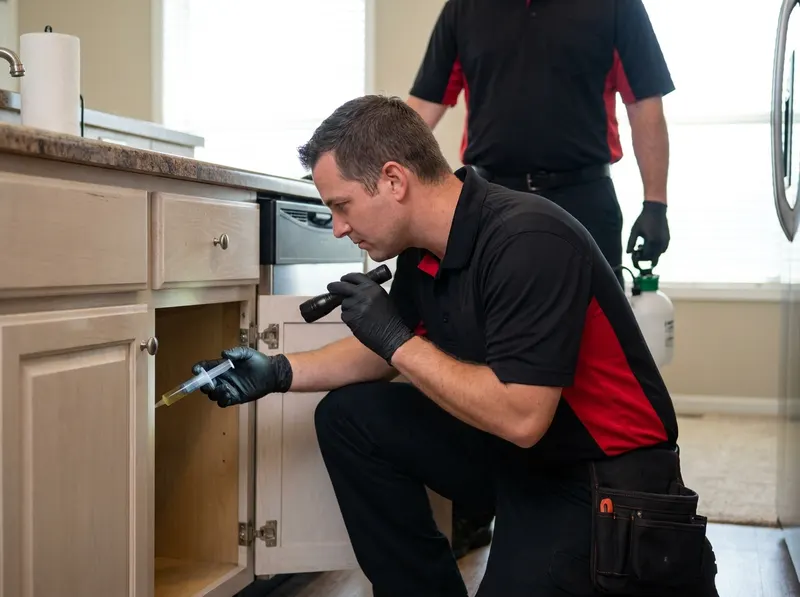
German cockroaches colonize heated electrical motor housings in refrigerators, dishwashers, microwave panels, and hollow cabinet joints. Remediation incorporates insect growth regulators (IGRs), targeted non-repellent matrix gels, and localized crack-and-crevice applications to collapse breeding generations without aerosol drift onto food preparation counters. The specialized insect growth regulators halt the molting cycle of immature nymphs, causing permanent reproductive sterility across the population. Technicians conduct detailed void inspections using specialized vacuum extraction to physically remove egg cases (oothecae) and active breeding clusters before applying residual bait treatments along concealed cabinet hinges and plumbing penetrations.
Get a quote →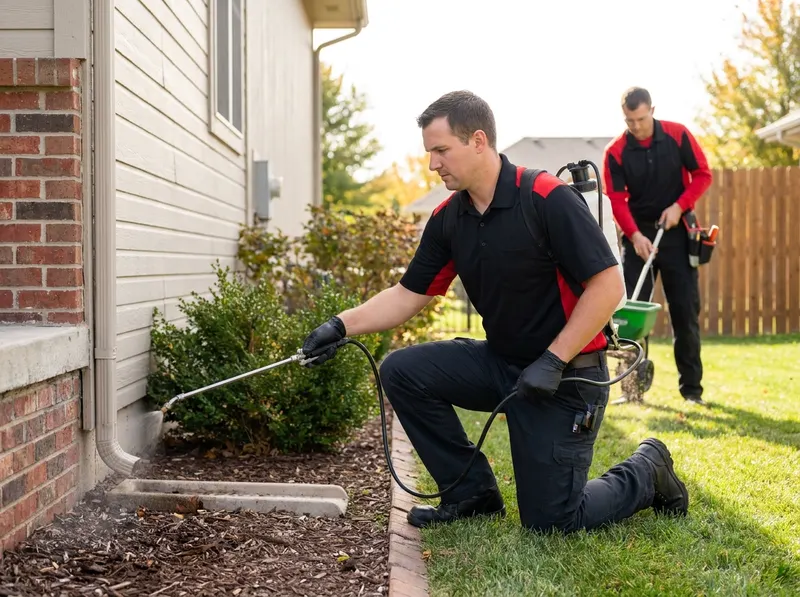
Exterior boundary barrier treatments establish a three-foot upward and three-foot outward defensive zone along foundation footings, basement daylight walls, and crawlspace vents. This targeted residual application stops perimeter invaders including field crickets, American cockroaches, boxelder bugs, silverfish, and ground beetles before they breach weatherstripping, window wells, and threshold plates. Treatments are calibrated quarterly to adapt to changing seasonal biology, deploying microencapsulated formulations that withstand summer surface heat and rainfall degradation. Technicians clear away active spider webbing and exterior insect debris from soffits, light fixtures, and window frames during each service pass.
Get a quote →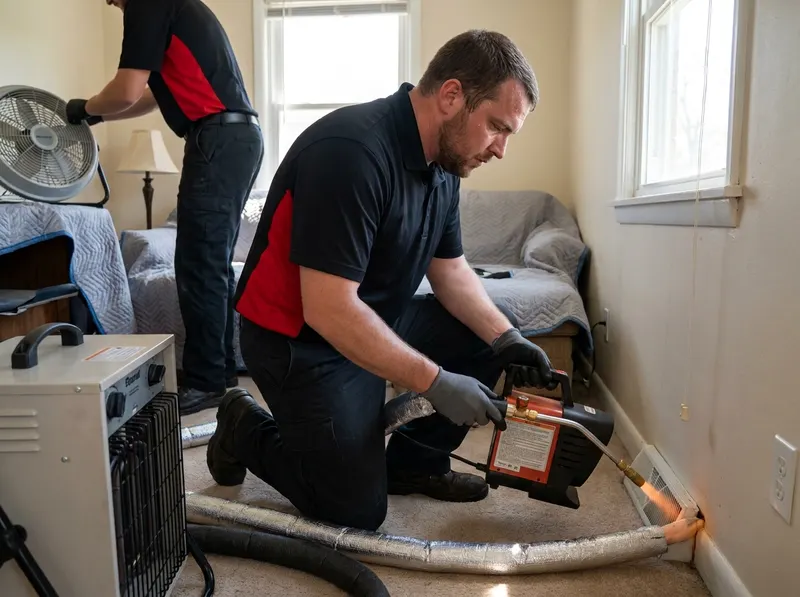
Bed bug infestations disrupt sleep and colonize mattress seams, upholstered furniture frames, nightstands, and perimeter carpet tack strips. Treatment combines specialized high-output thermal remediation exceeding 122 degrees Fahrenheit with targeted residual micro-dusts applied inside wall outlets and frame joinery to destroy active nymphs and eggs. Controlled convective heat circulation penetrates deep into mattress interiors, baseboard hollows, and wall cavities where conventional insect sprays fail to reach. Follow-up residual treatments along baseboard carpet tracks provide secondary protection to stop re-infestation from lingering hitchhikers brought into the home on clothing or luggage.
Get a quote →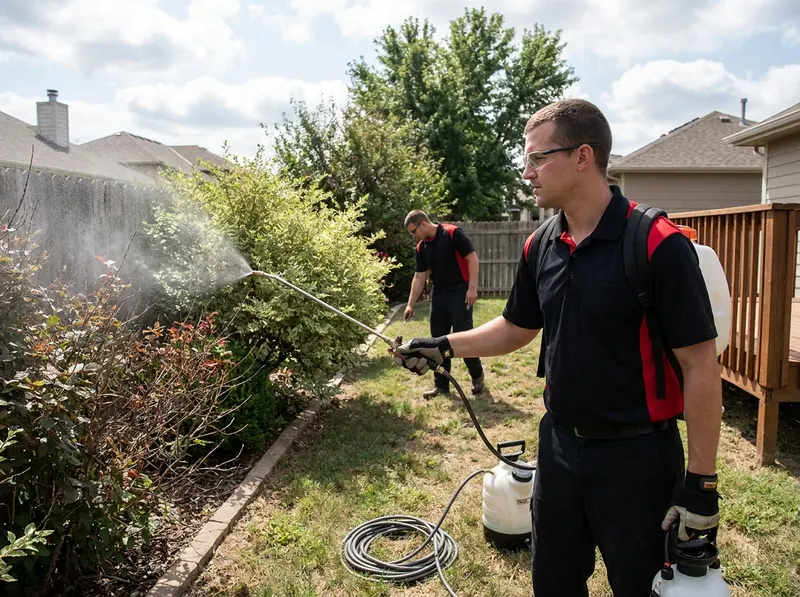
Warm humid conditions near the Arkansas River, the Little Arkansas River, and local storm channels accelerate mosquito and tick breeding across residential yards. Specialized backpack misting systems target the undersides of dense foliage, ornamental shrub beds, fence lines, and shaded turf perimeters using synthetic pyrethroids combined with biological insect growth regulators. Standing water sources and decorative drainage basins receive microbial Bacillus thuringiensis israelensis (BTI) larvicide dunks that eliminate mosquito larvae before emergence. Monthly treatments throughout the warm season interrupt the reproductive vector cycle across outdoor recreational spaces.
Get a quote →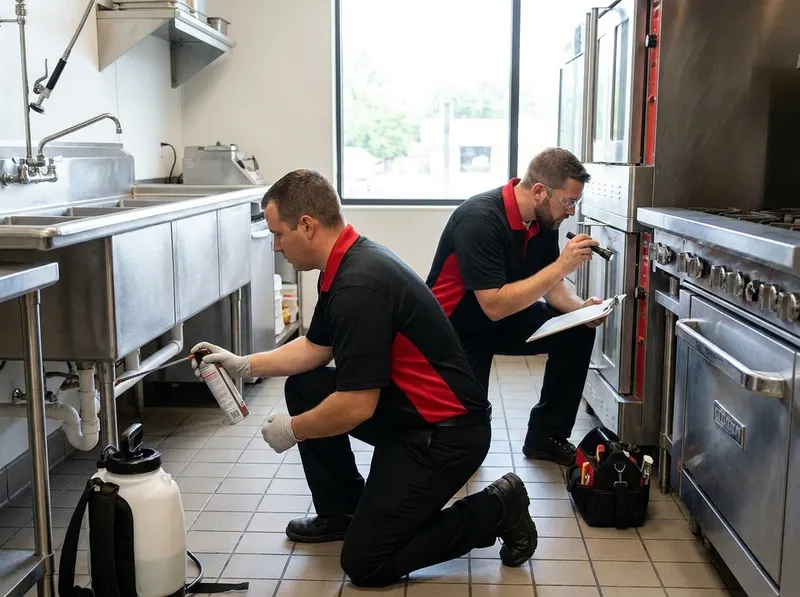
Commercial dining establishments, food packaging plants, and warehouse facilities throughout Wichita require strict regulatory sanitation documentation and active pest suppression. Services provide discreet off-hours structural inspections, structural drain enzyme foaming, rodent tamper-proof exterior bait stations, and flying insect trap maintenance compliant with Kansas Department of Agriculture standards. Electronic barcoded station scanning logs provide auditable documentation for local health inspectors. Targeted void treatments prevent pantry pests, flour beetles, drain flies, and rodents from contaminating dry goods and commercial food storage shelving.
Get a quote →You get a firm, itemized quote for your pest control sevice before any work begins, no surprises, no pressure.
Careful prep, tidy work, and a full cleanup when we are done. We treat your home and belongings like our own.
The same trusted, background-checked team from the first call to the final check.
Selecting the correct structural treatment depends entirely on identifying the primary biological vector compromising the property envelope. If active structural timber decay, mud exploration tubes, or discarded insect wings appear along interior mudsills, floor joists, rim joists, or basement framing, select a dedicated liquid subterranean termite treatment. Liquid termiticides bond directly with surrounding sandy loam soils to establish a non-repellent protective band that transfers through social grooming to collapse the underground reproductive queen.
If biting arachnids such as brown recluses or yellow sac spiders populate living spaces, opt for targeted indoor micro-crack and crevice dusting combined with an exterior perimeter barrier. Brown recluses nest deep within dead air voids, sheetrock cavities, dropped ceilings, and undisturbed attic cellulose insulation; broad-spectrum baseboard sprays fail to contact them and frequently scatter spiders into higher living areas. If scratching sounds, chewed electrical conduit, shredded pipe insulation, or gnawed baseboards occur in ceilings, subflooring, or crawlspaces, deploy an exterior rodent exclusion and mechanical snap-trap remediation program.
If German cockroaches occupy kitchens, bathroom fixtures, or multi-family plumbing chases, choose high-temperature steam void flushes combined with insect growth regulator bait rotations. German cockroaches carry rapid reproductive cycles that develop chemical resistance to single-compound pyrethroids, requiring active bait matrices that suppress nymph maturation. If stinging wasps, hornets, or yellow jackets establish subterranean nests or exterior eave nests near entry doorways, select focused hydraulic void injection to neutralize defensive colonies.
The critical operational trade-off centers on treatment scope: broad-spectrum perimeter defense prevents seasonal migrations but will not eliminate an established interior wood-boring termite colony or hidden attic rodent nest without specialized structural intervention. Conversely, isolated indoor spot treatments fail to arrest continuous pest waves migrating inward from untreated landscape mulch, unsealed crawlspace vents, or detached garage perimeters.
Every project gets a firm, written price after a free on-site visit. Ranges below for orientation.
Tell us about your pest control sevice job and we'll send a clear, written quote, usually the same day. Or just call and talk to a real Wichita pro.
(316) 570-9007
Properties near the Arkansas River, the Little Arkansas River, and the Wichita-Valley Center Floodway (locally known as the Big Ditch) experience severe hydrological fluctuations that drive subterranean termite swarms and perimeter insect reproduction during spring surges. Sandy alluvial soil corridors along Central Avenue, McLean Boulevard, and Broadway Avenue allow subterranean termite colonies to tunnel effortlessly toward residential foundation footings. Older historic homes across College Hill, Crown Heights, and Delano featuring native limestone fieldstone foundations, unvented crawlspaces, or aging cedar lap siding frequently face entrenched brown recluse spider populations and rodent intrusion when autumn temperatures drop rapidly. Modern slab-on-grade developments near Wichita State University, Benjamin Hills, and South City encounter heavy clay expansion and contraction cycles that crack exterior foundation perimeters, providing direct structural entry points for German cockroaches, pavement ants, and burrowing field mice. Field technicians calibrate non-repellent liquid termiticides, microencapsulated surface barriers, and mechanical exclusion sealants to withstand intense Great Plains wind shear, sub-zero winter freeze-thaw cycles, and summer heat exceeding 100 degrees Fahrenheit without chemical degradation.
Free estimates for Wichita & the surrounding area.
 Halvex Extermination