Eastern subterranean termites build underground colonies containing between 60,000 and 1,000,000 workers that migrate into residential foundations through 1/32-inch foundation cracks, brick weep holes, and expansion…
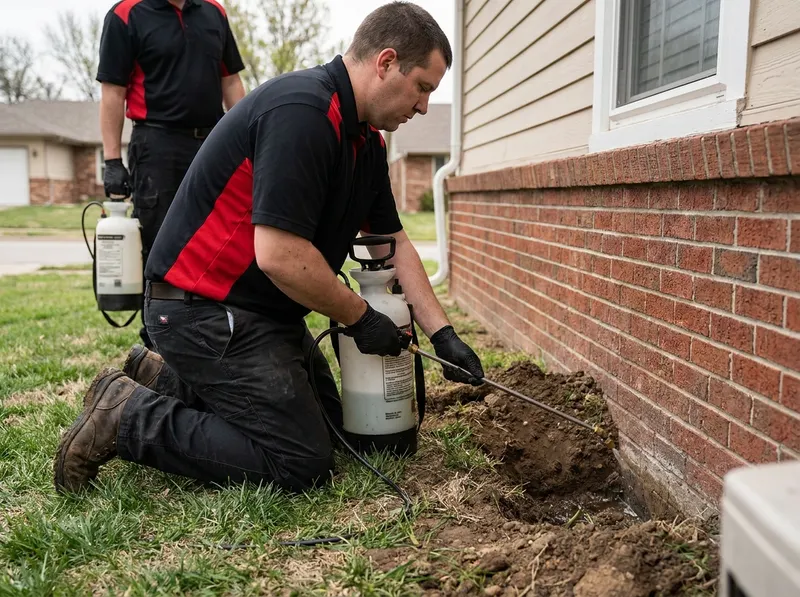
Eastern subterranean termites build underground colonies containing between 60,000 and 1,000,000 workers that migrate into residential foundations through 1/32-inch foundation cracks, brick weep holes, and expansion joints. In older riverbed parcels across Riverside and Delano, high water tables near the Arkansas River drive subterranean colonies upward into floor joists and structural sill plates. Liquid non-repellent soil barriers establish an undetectable continuous zone: foraging termites pass through treated soil without detection, transfer the active ingredient directly to the queen and nest mates via social grooming, and collapse the entire underground gallery within 60 to 90 days. For structures built over heavy clay soil profiles in College Hill and Crown Heights, trenching 6 inches wide by 6 inches deep around foundation footings locks active agents directly into the root zone without leaching.
Selecting between full perimeter liquid applications and exterior baiting systems hinges on foundation design and slab layout. Monolithic concrete slabs common throughout South City and Orchard Breeze benefit from perimeter trenching paired with pressurized sub-slab injection drilled at 12-inch intervals through garage aprons and covered patios. In contrast, historic stone and brick-and-mortar crawl spaces in Sleepy Hollow and Forest Hills favor exterior inground bait stations placed every 10 to 12 linear feet. Baiting systems use chitin synthesis inhibitors that arrest termite molting cycles; this avoids drilling interior hardwood floors while delivering zero vapor exposure to indoor air. The trade-off is mechanical: liquid treatments provide continuous immediate subterranean defense, while bait systems require 90-day station audits to confirm consumption rates.
Subterranean termite protocols differ strictly from drywood termite measures. Sedgwick County does not harbor indigenous drywood termite colonies, meaning structural tenting or whole-house fumigation is neither standard nor required in Wichita. Treatments target the soil interface exclusively. Application compounds bind tightly to soil minerals within 2 to 4 hours, remaining immobile during standard Kansas rainfall events. The exterior treatment zone permits safe, immediate access for household occupants, dogs, and children once the wet liquid application has dried to the touch, keeping living spaces completely non-toxic and unexposed.
Every job gets a firm, written price after a free on-site visit.
Tell us about your subterranean termite treatment job in Wichita and we'll send a clear, written quote, usually the same day.
 Halvex Extermination