Seasonal perimeter defense acts as an exterior shield designed to prevent structural infiltration during peak insect migrations across South Central Kansas. A preventative perimeter wash directly intercepts insects…
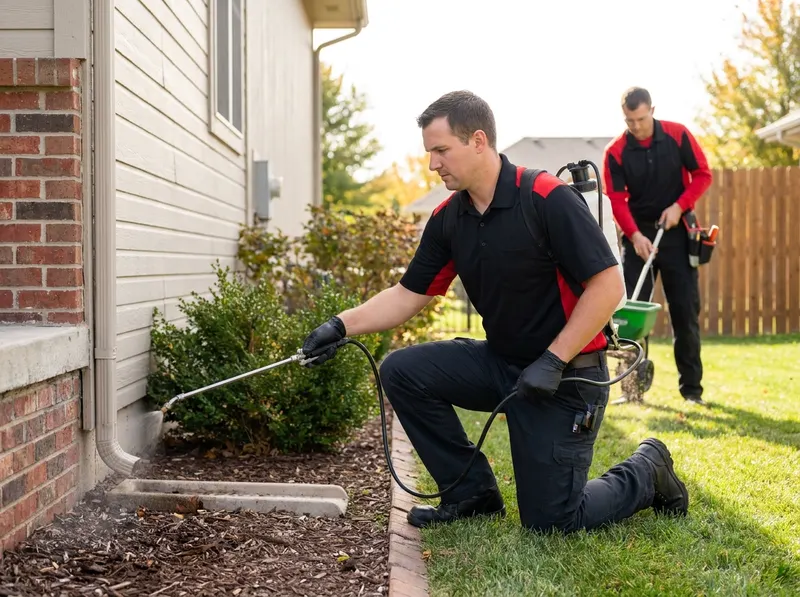
Seasonal perimeter defense acts as an exterior shield designed to prevent structural infiltration during peak insect migrations across South Central Kansas. A preventative perimeter wash directly intercepts insects before breeding colonies transition indoors, avoiding the necessity of aerosolizing interior living areas with residual insecticides. Foundation barriers fit properties with dense landscape mulch, slab groundlines, or mature tree cover near the exterior envelope. If structural timbers are already compromised by active wood-destroying insects, targeted bait systems or wall-void foamings are required instead of perimeter washes. The mechanical trade-off rests on regular quarterly reapplications, because ultraviolet breakdown and intense rainfall degrade exterior residual compounds within 90 days.
Wichita structural architecture faces intense pest pressures driven by the Arkansas River basin and heavy clay soil shifts. In College Hill and Riverside, historic stone foundations and deep porch crawlspaces create cool shelter zones for hunting wolf spiders and wandering brown recluse populations during 95-degree July heatwaves. In Delano and South City, street-level storm runoff pushes subterranean perimeter roaches and pavement ants toward brick weep holes and exterior sill plates. The application deploys microencapsulated exterior suspensions that adhere to porous red brick, limestone footings, and landscape timbers in Forest Hills and Sleepy Hollow. Applying macro-granules into gravel and decorative mulch buffers surrounding properties in Crown Heights and Benjamin Hills halts insect breeding beds near the structure.
Technicians treat perimeter perimeters in three operational steps to preserve domestic safety while eliminating perimeter incursions:
1. Technicians complete an initial perimeter sweep to locate pest bridging pathways, ground-touching ornamental branches, and foundation settlement cracks.
2. Crews apply microencapsulated suspensions to the lower 36 inches of foundation walling and 120 inches of adjacent ground beds, clearing spiders and ant trails.
3. The team applies low-dust insecticide granules into turf thatch, retaining walls, and mulch beds to generate an extended subterranean barrier.
Every job gets a firm, written price after a free on-site visit.
Tell us about your seasonal perimeter insect defense job in Wichita and we'll send a clear, written quote, usually the same day.
 Halvex Extermination